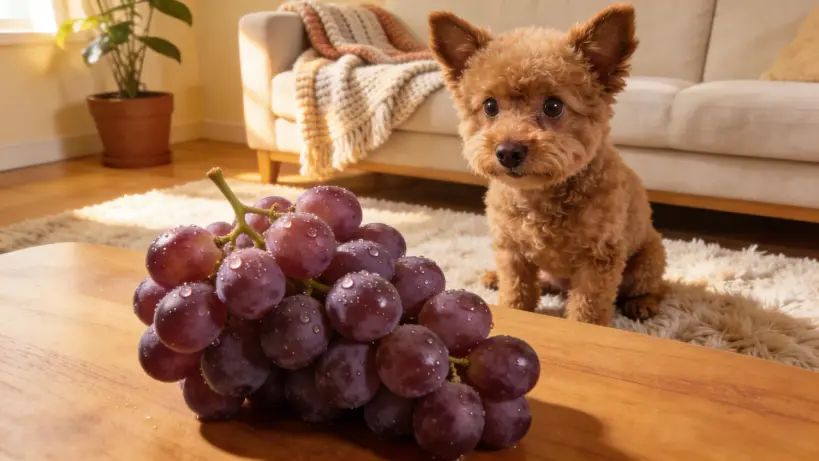
Every pet parent knows that the biggest fear is a sudden accident — a few days ago, my dog sneaked a grape from the table when I wasn’t looking, and I was instantly covered in cold sweat! Later, I checked the information and realized that grapes are extremely toxic to dogs; even just one grape can cause serious consequences.
Today, I’m sharing the entire process of my first aid, the vet’s professional explanation, and the most common questions everyone cares about, hoping to help every dog parent avoid panicking when encountering a similar situation.
1. Sudden Incident: The Entire Process of My Dog Accidentally Eating a Grape
I was cooking in the kitchen that day, and I put the grapes on the coffee table. When I turned around, I found my 5-kilogram Teddy had already chewed and swallowed one grape, not even leaving the skin.
At first, I didn’t care much until I saw a popular science that grapes are highly toxic to dogs, which made me panic. Although my dog was in normal condition at that time, I immediately contacted the pet hospital and prepared for first aid.
A reminder: Dogs may show no symptoms in the early stage after ingesting toxic substances, but the toxicity will gradually take effect. Be sure to handle it immediately and never take chances.

2. Emergency Treatment: 3 Key Steps I Took Before Taking Him to the Vet (Vet-Approved)
After contacting the vet, the doctor told me that simple first aid can be done on the way to the hospital to reduce toxin absorption. Remember these 3 key steps (on the premise that the dog has no severe symptoms such as vomiting or coma; if there are, take him to the hospital directly and do not handle it yourself).
Step 1: Stay Calm and Confirm the Amount and Time of Ingestion
First, I forced myself to calm down, carefully recalled the time of ingestion (about 10 minutes ago), confirmed that he only ate one grape (checked the coffee table and found no leftovers), and told the vet my dog’s weight, age, breed, and the exact time of ingestion — this information is crucial for the vet’s subsequent treatment, helping the doctor judge the possible impact of the toxin.
Step 2: Do Not Induce Vomiting to Avoid Secondary Harm
Many parents’ first reaction when encountering this situation is to induce vomiting in their dogs, but the vet emphasized repeatedly: Do not induce vomiting in your dog by yourself! Especially if the ingestion time exceeds 1 hour, the dog itself has a tendency to vomit, or the dog is small in size (like my Teddy, under 5 kilograms), inducing vomiting may cause the dog to choke, suffocate, and even worsen the harm.
If the dog vomits actively, do not stop it. Keep the vomit for the vet to test the toxin later.
Step 3: Fasting and Water Restriction, and Rush to the Vet Quickly
Inducing vomiting is not advisable. The next thing to do is to let the dog fast and restrict water intake to reduce gastrointestinal burden and avoid accelerated toxin absorption. Then I immediately held my dog and drove to the nearest pet hospital, which only took 15 minutes — the faster you take the dog to the vet, the higher the cure rate.
3. Vet’s Detailed Explanation: How Toxic Are Grapes to Dogs?
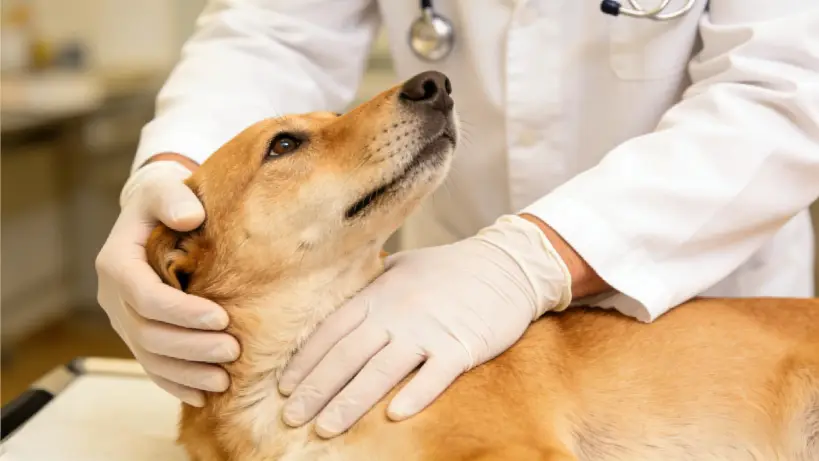
After arriving at the hospital, the vet immediately examined my dog and explained the toxicity of grapes to dogs in detail. Many knowledge points subverted my cognition, which I sorted out to share with everyone:
(1)Toxic Source: Not Yet Clear, but Extremely Harmful
The vet said that the scientific community has not yet identified the specific component in grapes that causes poisoning in dogs. It may be an unknown alkaloid, or a substance in grape skins and seeds. But what is certain is: Whether grapes are fresh, dried (raisins), or used for winemaking, they are highly toxic to dogs, and there is no safe dose.
Important reminder: Raisins are more toxic than fresh grapes. One raisin is equivalent to several fresh grapes in toxicity. Parents must keep raisins and grape products (such as grape bread, grape juice) out of the dog’s reach.
(2)Poisoning Symptoms: Onset Time and Manifestations, Parents Should Be Alert
After a dog ingests grapes, poisoning symptoms usually appear within 6-12 hours, and a few within 24 hours. The specific manifestations are:
- Early stage: Vomiting, diarrhea, listlessness, loss of appetite, possibly accompanied by drooling;
- Mid-term: Dehydration symptoms (such as sunken eye sockets, poor skin elasticity), decreased urine output, or even no urine;
- Late stage: Acute renal failure, which can lead to coma, convulsions, and even death in severe cases.
Fortunately, my dog had no obvious symptoms because he was taken to the vet in time — if we wait until symptoms such as no urine or coma appear, the treatment difficulty will increase greatly, and sequelae may even remain.
(3)Treatment Methods: Different Treatments for Different Situations
According to my dog’s situation, the vet gave two core treatments: first, gastric lavage to remove residual toxins in the stomach; second, intravenous infusion to supplement water and nutrients, promote toxin excretion, and protect kidney function.
If the dog ingests grapes for a long time and has already shown poisoning symptoms, hemodialysis may be needed to help the kidneys metabolize toxins. The vet emphasized: There is no specific antidote for grape poisoning. The key to treatment is “early detection, early medical treatment, and early treatment”. The longer the delay, the higher the risk to the dog’s life.
4. Follow-Up Care: Key Points for My Dog’s Recovery After Seeing the Vet
My dog was treated in the hospital for 2 days. After re-examination, his kidney function was confirmed to be normal with no abnormalities, so I took him home for care. The vet gave me several key points for follow-up care, which you can refer to:
- Light diet: Within 1-2 days after returning home, feed the dog digestible food (such as soaked dog food, millet porridge) in small and frequent meals to avoid increasing gastrointestinal burden. Do not feed any snacks or fruits;
- Ensure water intake: Let the dog drink water freely to promote metabolism, but do not force him to drink to avoid vomiting;
- Observe the condition: Observe the dog’s spirit, appetite, defecation, and urination every day. If there are abnormalities such as vomiting, diarrhea, or decreased urine output, take him to the hospital for re-examination immediately;
- Avoid re-ingestion: Thoroughly clean up grapes, raisins, and related products at home, and develop the habit of “not placing things on low surfaces”, especially the coffee table and dining table that the dog can easily reach.
After a week of care, my dog fully recovered his usual vitality. This incident sounded the alarm for me — raising a dog really cannot have any carelessness. Many foods we think are safe may be “fatal poisons” for dogs.

5. Frequently Asked Questions (Must-Read for New Pet Parents)
Here are answers to common questions to help new pet parents avoid mistakes:
Q1: My dog only ate one grape. Do I really need to take him to the vet?
A: Yes. There’s no safe dose of grapes for dogs, even one can be toxic, especially for small dogs. Take them to the vet immediately, even if they show no symptoms.
Q2: How long after a dog ingests grapes will poisoning symptoms appear?
A: Usually within 6-12 hours, sometimes 24 hours. Even after 24 hours of no symptoms, get a kidney check for your dog.
Q3: Are raisins, grape juice, and wine also toxic to dogs?
A: Yes. Toxicity order: Raisins > Wine > Fresh grapes. Keep all grape products out of your dog’s reach.
Q4: What should I do if my dog has already shown poisoning symptoms?
A: Take them to the vet immediately. Do not induce vomiting or give water, as it will worsen the condition.
Q5: Can my dog eat grapes after recovery?
A: Absolutely not. Even after recovery, grape ingestion may cause potential kidney damage, so never feed grapes again.
Finally, I want to say to all dog parents: Dogs are very curious and always like to sneak food. What we can do is hide the “dangers”, learn more about the forbidden foods for dogs, and a little more care can reduce a little accident.
I hope this article can help everyone, and may every fur baby accompany us healthily and safely ❤️